President Kang Il-ku says university aims for 2,500 international students by 2030 while expanding joint degrees, overseas research and industry-linked education
Behind each university’s global ambitions are choices about what to preserve, what to develop and where to go next. In “World Class,” The Korea Herald interviews leaders of Korean universities about the strengths they are cultivating and the futures they envision. — Ed.
ASAN, South Chungcheong Province — Hoseo University is betting that its strongest draw for international students is not simply a place on campus, but a path from the classroom into the industries shaping South Korea’s regional economy.
The university is building that path around its location near major manufacturing clusters, linking education and research with employment, entrepreneurship and international partnerships.
Its challenge is to turn those connections into opportunities that students can carry into careers in Korea or abroad.
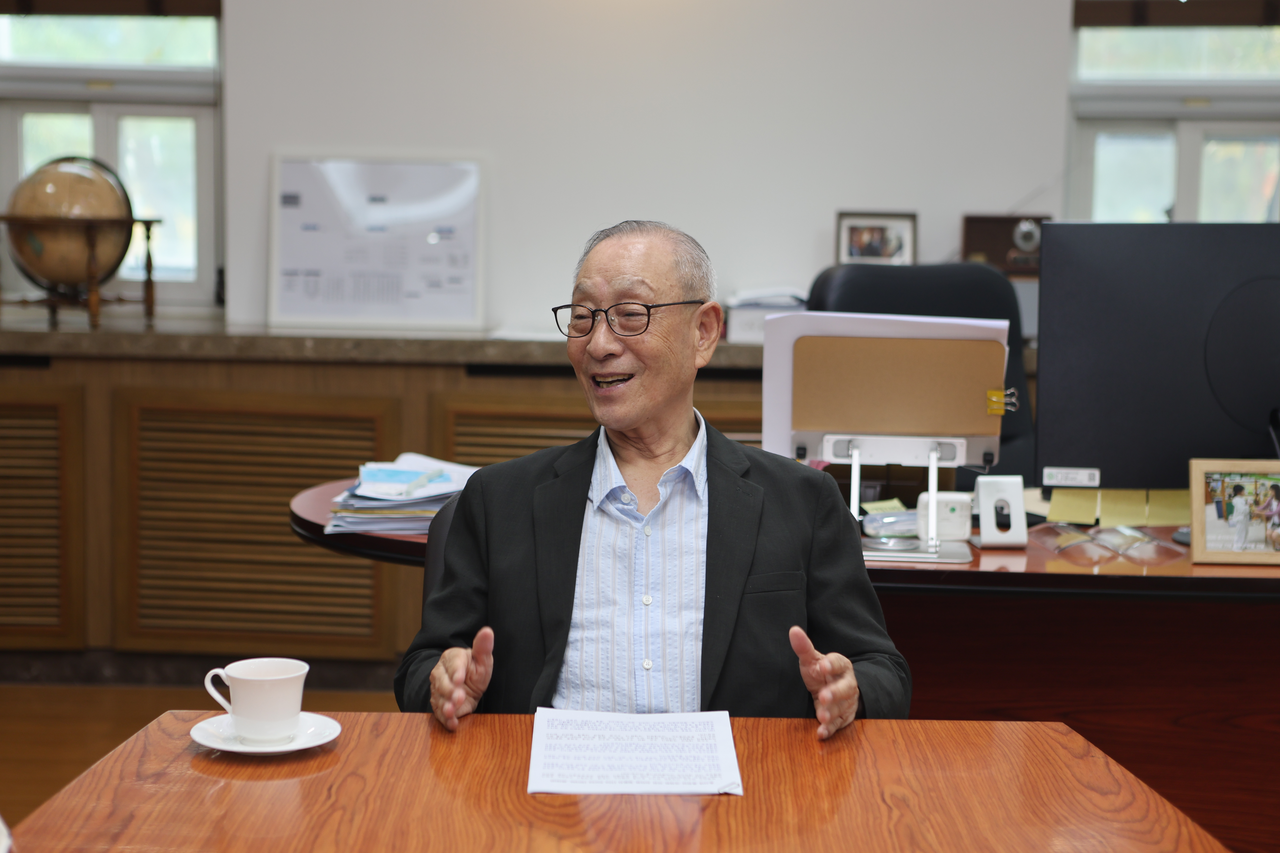
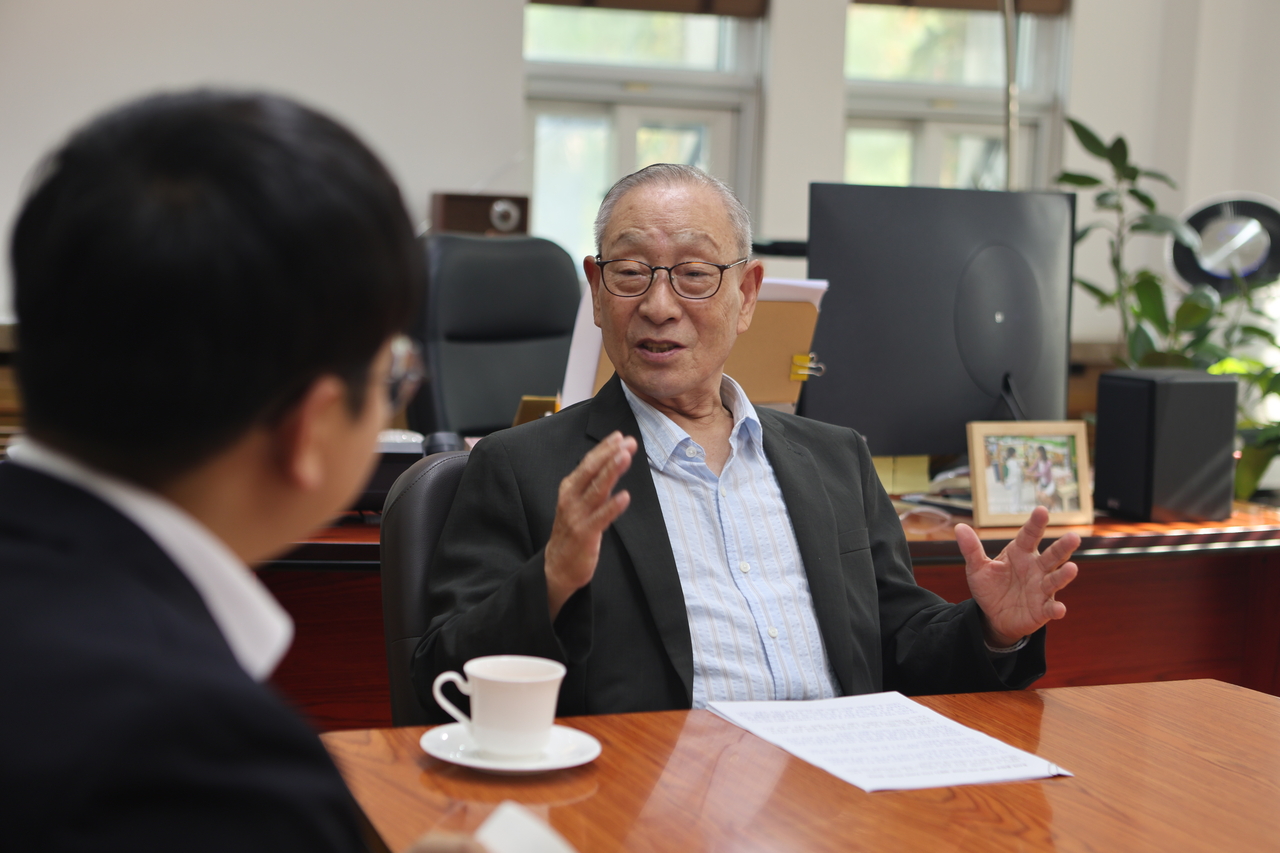
“Our strength is in industry-academia cooperation,” Hoseo University President Kang Il-ku told The Korea Herald on Oct. 12.
“We want to connect South Chungcheong Province’s key industries and our education and research capabilities with overseas universities and companies, so students can experience real industrial challenges and develop skills that are competitive globally.”
That approach underpins Hoseo’s ambition to become what Kang calls a “distinguished world-class university.” Rather than follow the model of large universities in Seoul, Hoseo is building its international identity around fields in which it already has deep ties, including semiconductors, displays, future mobility, entrepreneurship and industry-linked education.
Those fields are closely connected to the industrial clusters around Cheonan and Asan, South Chungcheong Province, where the university’s two main campuses are located.
Connecting international students to regional industry
“I believe the internationalization of regional universities depends on how well we connect the region’s strengths to students’ futures,” Kang said.
South Chungcheong Province is home to major semiconductor, display and future mobility operations, as well as extensive supplier networks.
Asan hosts Samsung Electronics’ Onyang semiconductor operations and a dense network of materials, parts and equipment companies.
The city has also been selected as the site of a government-backed Global Startup Campus aimed at attracting and supporting foreign entrepreneurs.
Hoseo has sought to build practical education programs around that industrial base.
It operates three early-employment contract departments in semiconductor and display engineering, advanced-industry AI engineering and logistics and distribution.
Companies participate in curriculum design, and industry employees contribute to teaching.
In 2025, the university was selected by the Ministry of Trade, Industry and Energy as a semiconductor academy education center. It also runs packaging and testing programs with companies including Samsung Electronics, Hana Micron and SFA Semicon.
Hoseo sees this experience as a foundation for extending industry-linked semiconductor education overseas. In 2024, its semiconductor specialization program organized visits to the Vietnamese operations of Hana Micron, KX HiTech and Hanyang Digitech.
The university also wants to apply its industry-linked approach more broadly to international students, particularly in fields where employers need foreign talent.
Its plans include combining technical training with workplace Korean and communication courses, so students can apply their skills on the job after graduation.
For Kang, employment is the key link.
“The first challenge we need to address is ensuring that international students’ education leads to stable jobs,” he said. “Settlement begins with a job where they can use their major and skills to plan their future.”
He acknowledges that this part of its strategy is still a work in progress.
Kang said regional talent visa rules should be reviewed to determine whether they match demand at industrial sites and support employment and settlement. He added that areas needing improvement should be communicated to the government.
As part of the government’s Anchor project, Hoseo is pursuing a support system that would guide international students from recruitment through settlement.
The university would provide education and career guidance, companies would offer opportunities to apply students’ skills, and local governments would support visas, housing and other aspects of settlement.
Many of Hoseo’s international graduates currently return to their home countries rather than seek work in Korea, the university said. Korean companies have yet to recruit international graduates on a large scale, and visa-related administrative hurdles remain.
Some Hoseo graduates have found jobs at semiconductor and display-related companies, where they help connect Korean businesses with their home markets.
Kang also sees graduates who return home as part of the university’s internationalization outcomes.
What matters, he said, is whether students can use the professional knowledge and experience they gained at Hoseo to build careers, in Korea or elsewhere.
Internationalization beyond student exchange
Hoseo has 1,309 international students from 48 countries, up from 708 in 2022, according to university data. It aims to raise that number to 2,500 by 2030.
But Kang says student numbers alone are not enough to measure the success of internationalization.
He wants the university to consider whether graduates work in fields related to their studies, whether employers value their contributions and whether students feel their education was worthwhile.
“I would feel the greatest sense of reward if an international student said, ‘I’m glad I came to Hoseo,’ and recommended the university to friends or younger students,” he said.
Hoseo is also seeking to expand overseas joint education programs and award more degrees through them.
It has operated a joint curriculum with China’s Hunan Institute of Science and Technology since 2015, with Hoseo professors teaching courses in semiconductors and cosmetics at the Chinese institution.
In 2025, 44 Chinese students came to Hoseo for three weeks of cosmetics manufacturing education, including practical training linked to regional companies.
Kang said the university plans to build on these programs and begin jointly awarding Hoseo degrees to Hunan Institute of Science and Technology students in 2027.
The goal is for overseas education to connect not only to degrees, but also to students’ careers after graduation.
From Morocco to Europe
Hoseo’s international strategy also includes research partnerships abroad, with links to industry.
One central initiative is the ATLAS Innovation Hub, launched with Cadi Ayyad University in Morocco and Asan. It is designed to connect Hoseo’s education and research capabilities, Asan’s industrial base, and overseas universities and companies.
The partners are developing their first joint research project, an AI-based digital agriculture platform.
Hoseo will develop the platform using AI and digital twin technologies, while Cadi Ayyad University will test it in local agricultural conditions.
The project reflects Kang’s view that international cooperation should address practical problems, rather than end with memorandums of understanding. Corporate participation has not been finalized, but the partners plan to explore commercialization as the technology is tested.
Hoseo is also looking ahead to a proposed Horizon Europe joint research project in 2027.
It is discussing a consortium with the Spanish National Research Council, France’s National Research Institute for Agriculture, Food and Environment, Paris-Saclay University, and the University of Reading and Rothamsted Research, both in the United Kingdom.
If the proposal moves forward, it would extend the Morocco partnership beyond a bilateral university relationship and connect Hoseo with research institutions across Europe and North Africa.
Kang says this kind of collaboration can bring together universities with different technical strengths to tackle shared problems.
Venture spirit as a global strategy
Entrepreneurship is another part of Hoseo’s identity that Kang wants to take global. The university has emphasized venture education and startup support since the 1990s and established Korea’s first graduate school dedicated to venture studies in 1999.
Its current ambition is to help startups from its regional ecosystem test themselves in overseas markets.
Hoseo says startups nurtured through its venture network, including GnT and ARA, have won prizes at international competitions and explored markets in Malaysia and Europe.
Kang believes the university’s proximity to semiconductor, display and mobility companies, from major corporations to suppliers, gives its entrepreneurship programs an advantage.
The manufacturing base can help students and startups move from an idea to prototyping, testing and production while staying connected to industry.
He also wants international students and overseas researchers to become part of that ecosystem.
“I want international students at Hoseo to gain the confidence to think, ‘I could start a business with my own idea,’” he said.
“If they have a good idea, they can work with our faculty and regional companies to turn it into an actual product and then take on markets in their home country or elsewhere.”
Taking Hoseo education beyond the campus
Hoseo is also considering ways for international students to access its programs without spending their entire degree in Korea.
The university is studying online education models, including those operated by Arizona State University, and exploring ways to deliver its semiconductor and venture entrepreneurship courses digitally.
One possibility Kang raised is a model in which students study online in their home countries for two or three years before coming to Hoseo for a year of equipment training, prototype development, research or corporate projects.
The proposal remains under review. The university has not finalized a launch date or enrollment target, and the online and on-campus arrangement is one possible format, not a confirmed degree program.
Hoseo plans to start by offering online courses with demonstrated overseas demand, particularly in semiconductors and venture entrepreneurship. It will then assess whether they can be expanded into degree programs.
The idea reflects the broader direction of Kang’s strategy: Bringing overseas students to Hoseo, while also taking fields in which the university believes it has something distinctive to offer to students abroad.
“Internationalization is not a concept limited to a particular department or certain students,” Kang said. “Just as digital transformation drives change across a university, internationalization should also be viewed as encompassing education, research, industry-academia cooperation and the overall student experience.”
His longer-term goal is for students overseas to see Hoseo not simply as another Korean university, but as a place tied to opportunities they cannot easily find elsewhere.
“I want students around the world to say, ‘If I want to learn this and take on this kind of challenge, I have to go to Hoseo,’” Kang said.
seungku99@heraldcorp.com